


Houdini Render Engines 2026: Karma XPU vs Redshift vs Mantra – Which to Choose?
Choosing the right Houdini render engines 2026 is no longer a matter of preference, it directly impacts delivery timelines, per-frame compute costs, and the long-term stability of your entire pipeline. Yet many studios and independent artists are still making this decision based on familiarity rather than current production realities.
The landscape has shifted significantly. SideFX has been systematically de-emphasizing Mantra in favor of Karma XPU, which is now the officially supported rendering path within Houdini. Meanwhile, Redshift continues to hold its ground as the dominant GPU-native third-party renderer across mid-to-large production environments.
This article compares all three Houdini render engines across three production-critical dimensions: render speed, output quality, and scalability on cloud infrastructure. The goal is not to declare a universal winner, but to give you the specific information you need to make a defensible choice for your workflow in 2026.
Table of Contents
Understanding Houdini Karma vs Mantra vs Redshift
Before getting into a direct comparison of Houdini render engines in 2026, it helps to understand where each engine sits architecturally and strategically. These are not interchangeable tools with minor aesthetic differences – they represent fundamentally different approaches to rendering in Houdini.
Mantra – The Legacy CPU Renderer
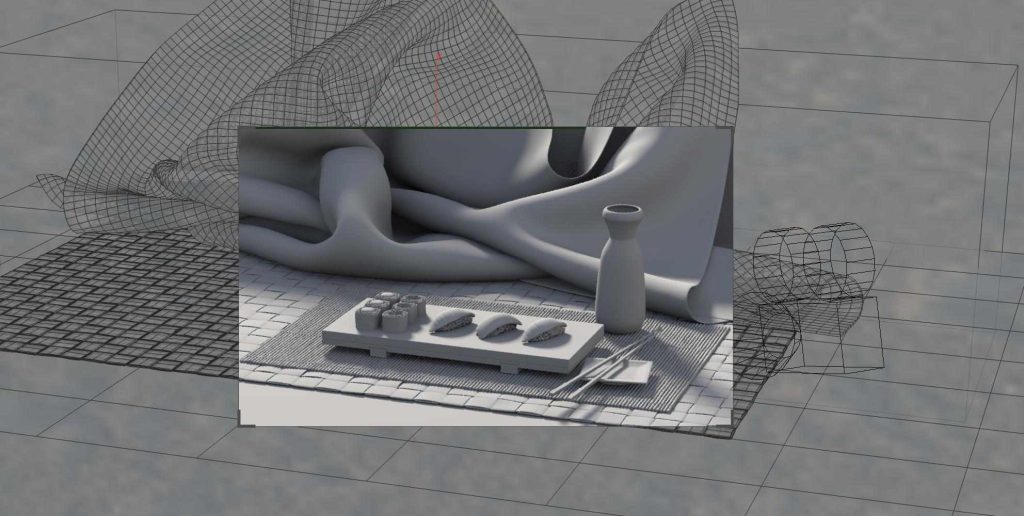
Mantra has been Houdini’s built-in renderer for over two decades. It ships with every Houdini license at no additional cost and has historically offered some of the deepest integration with Houdini’s procedural shading and geometry pipeline.
Its core architecture combines PBR path tracing with micropolygon rendering – a hybrid approach that gave it strong performance on displacement-heavy assets and complex motion blur when GPU-based alternatives were not yet mature. For a long time, Mantra was simply the reference renderer for Houdini-based VFX work.
That time has passed. SideFX has stated that Karma will become Houdini’s only supported built-in renderer, replacing Mantra.
Karma XPU – SideFX’s Strategic Successor
Karma is the native rendering solution SideFX is actively investing in. Built on the USD/Hydra framework, it is architecturally aligned with where the broader VFX industry is heading – universal scene description, cross-DCC interoperability, and open shading standards via MaterialX.
It is important to distinguish between two modes within Karma.
- Karma CPU is the original path-traced implementation and serves as a legacy fallback.
- Karma XPU is the production-forward architecture – a hybrid CPU+GPU renderer designed to distribute workloads across heterogeneous compute resources, including multi-GPU configurations.
When this article refers to Karma going forward, it means Karma XPU unless otherwise noted.
Karma XPU has been maturing rapidly through Houdini 20.x releases. It now supports full ACES color management, MaterialX shading networks, and is receiving ongoing optimization for volume rendering – one of Houdini’s core use cases. It is the render engine SideFX is building their future around.
Redshift – GPU-Native, Studio-Proven
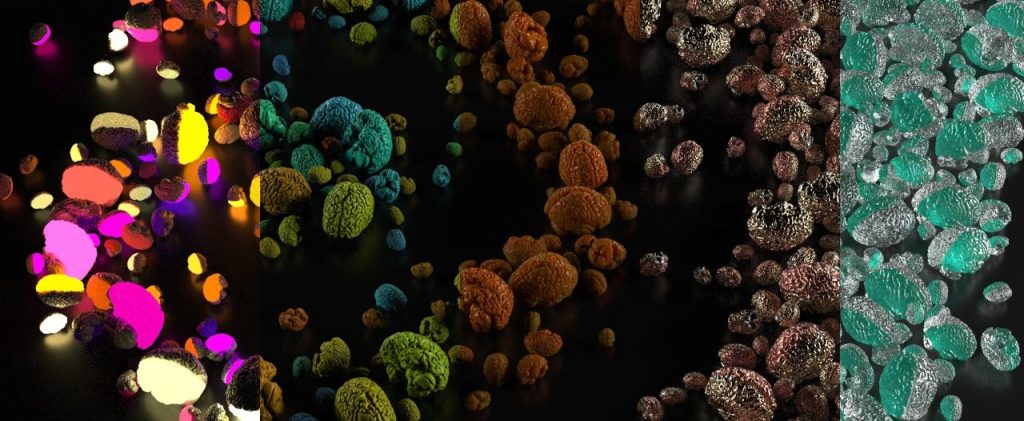
Redshift was acquired by Maxon in 2019 and is distributed as part of the Maxon One subscription. It is a fully GPU-accelerated renderer – CUDA on NVIDIA hardware, with Metal support on Apple Silico – and operates primarily as a biased renderer, meaning it uses approximations to converge faster, though an unbiased mode is available.
Its Houdini plugin offers full support for Houdini’s procedural workflow including volumes, particles, and complex instancing. Redshift is not a newcomer to production pipelines – it has been the renderer of choice for GPU-forward studios for years, and its stability record on large-scale projects is well established.
The subscription cost is a real consideration for smaller teams, but its raw performance on GPU hardware tends to justify the expense in deadline-driven environments where render time directly translates to cost.
Houdini Render Engines 2026: Speed, Quality, and Cloud Scalability Compared
The right engine is not just about feature lists – it is about how it holds up under real production conditions. Here is how the three Houdini render engines in 2026 compare across the three dimensions that matter most
Render Speed
This is where the most dramatic differences exist between the three engines.
Mantra is CPU-only. On a modern high-core-count workstation, it is acceptable for simple shading and lookdev tasks, but it scales poorly under production conditions – particularly for VDB volumes, large particle systems, complex area lighting, and dense instancing. A frame that takes 20 minutes on Mantra can often be completed in 2–3 minutes on a GPU-native alternative.
Karma XPU, running in XPU mode, has made significant performance gains in Houdini 20.x. Its hybrid architecture allows it to offload computation to GPU while keeping CPU as a fallback for operations that exceed VRAM capacity. For VFX-heavy work – especially volume renders that are deeply integrated with Houdini’s simulation outputs – Karma XPU’s performance is now competitive and in some volume-specific scenarios matches Redshift.
Redshift is the fastest of the three for the majority of production render scenarios. Its GPU-native biased rendering engine is optimized for throughput, and on a machine with two or more high-end GPUs, it delivers frame times that are difficult to match. It is the default choice in studios where lookdev iteration speed and shot turnaround are primary constraints.
| Engine | Execution | Volume Rendering | Iteration Speed | Cloud Cost Efficiency |
| Mantra | CPU only | Slow, high memory | Poor | Low |
| Karma XPU | CPU + GPU hybrid | Strong (H20+) | Good | High on GPU nodes |
| Redshift | GPU (CUDA/Metal) | Good | Excellent | High on GPU nodes |
Cloud implication: CPU render nodes are inexpensive per unit, but Mantra’s poor scaling means you need significantly more of them to match the wall-clock time of a single high-end GPU node running Karma XPU or Redshift. In most production scenarios, GPU-based rendering is both faster and more cost-effective on cloud infrastructure.
Output Quality
Mantra‘s output quality was the industry benchmark within Houdini for many years. Its micropolygon displacement, sub-pixel motion blur, and subsurface scattering implementations are technically excellent. If you have Mantra renders you are proud of, the quality was real – the limitation is not the output, it is the time and compute cost required to achieve it.
Karma XPU is a physically accurate path tracer. Its output quality is high by definition, and its integration with MaterialX gives it a significant advantage in terms of cross-DCC shading consistency – a material authored in Karma XPU can be shared with other USD-compatible renderers without rebuilding the shader network. Some edge cases in complex light transport (e.g., caustics through refractive volumes) are still maturing as of the Houdini 20.x cycle, but for the vast majority of production scenarios, Karma XPU’s output meets feature film standards.
Redshift‘s output quality is well-understood and widely accepted in production. Its biased rendering architecture does make approximations, but these are controllable and the renderer is mature enough that experienced TDs know exactly which settings to push when maximum accuracy is required. For hero asset renders requiring the highest physical accuracy, Karma XPU may be the better choice; for anything where iteration velocity is the primary concern, Redshift’s quality-to-speed ratio is hard to beat.
Cloud Scalability
This is where the choice of render engine has the most direct financial consequence for studios using cloud render infrastructure.
Mantra scales horizontally – more CPU nodes, more parallel frames. The distribution model is straightforward and well-understood. The problem is cost: because Mantra requires significant CPU time per frame, the total node-hours required for a typical VFX sequence can be very large, even with a high degree of parallelism.
Karma XPU and Redshift both benefit directly from GPU cloud nodes. High-VRAM GPU instances (RTX 3090, RTX 4090, or A100 and H100 GPUs) provide dramatically better cost-per-frame ratios for GPU-capable renderers. VRAM capacity is particularly important for complex Karma XPU scenes, where XPU mode can leverage CPU RAM as overflow when scene data exceeds GPU memory.
Licensing is also a practical consideration for cloud deployments. Karma XPU is included in the Houdini license, which simplifies cloud node configuration. Redshift uses Maxon’s licensing model, which requires attention when configuring floating or per-node licenses on cloud infrastructure – most cloud render providers have established workflows for this, but it adds a configuration step that Karma XPU users do not face.
Why Mantra Is Being Phased Out – And What That Means for Your Pipeline
SideFX has not made a quiet or ambiguous decision here. Karma is the official future of rendering within Houdini. Mantra is in maintenance-only status – it receives bug fixes, but no new rendering features, no GPU acceleration, no MaterialX support, and no USD/Hydra integration.
The broader industry context reinforces this direction. USD has become the dominant scene interchange format across major studios and VFX pipelines. Karma XPU is built on the USD/Hydra architecture from the ground up. Mantra is not and cannot be, given its legacy design. As USD adoption deepens, the gap between Mantra and the rest of the industry’s tooling will become increasingly difficult to bridge.
The practical risks of staying on Mantra are accumulating:
- New Houdini features that touch the rendering layer will not be exposed in Mantra.
- MaterialX shader libraries shared across a team or pipeline will not be usable in Mantra.
- Any studio transitioning to a USD-centric pipeline will find Mantra incompatible with the scene assembly workflow.
- Cloud rendering cost structures increasingly favor GPU compute, where Mantra offers no benefit.
The migration cost from Mantra to Karma XPU or Redshift is real and should not be minimized. Shader networks need to be rebuilt or converted, lookdev re-approval takes time, and render farm configurations need updating. For studios with an active production, this work must be phased carefully.
However, the alternative – deferring the migration until it is forced by a pipeline incompatibility or a production deadline – is a significantly higher-risk position. Studios still on Mantra should begin planning a phased transition now.
Karma XPU vs Redshift – Which to Choose After Mantra?
Once the decision to move away from Mantra is made, the real choice is between Karma XPU and Redshift. Both are production-viable in 2026. The decision comes down to pipeline priorities.
Choose Karma XPU if:
- Your pipeline is Houdini-native and you want full rendering integration without third-party licensing overhead
- You are adopting or planning to adopt a USD-centric pipeline – Karma XPU is the most natural rendering solution in that context
- You work heavily with Houdini’s FX outputs – volumes, VDBs, particles – where deep Houdini integration provides workflow advantages
- Long-term alignment with SideFX’s development roadmap is a priority
- You are on a tight software budget and need to avoid additional renderer subscription costs
Choose Redshift if:
- Raw render speed and fast lookdev iteration are the primary production constraints.
- Your team works across multiple DCCs – Redshift’s cross-application support (Cinema 4D, Maya, Blender, Houdini) reduces context switching and enables a more unified shading library
- You are on a tight deadline schedule and need a renderer with a long, proven track record in high-pressure production environments
- Your cloud infrastructure is already GPU-optimized and you are comfortable managing Maxon floating licenses
Hybrid approach: Some studios have found success using Redshift for hero asset renders and lookdev iteration where speed matters most while using Karma XPU for FX-heavy shots that are deeply integrated with Houdini’s simulation pipeline. If your team has the pipeline maturity to maintain two renderer configurations, this approach can capture the best of both tools.
Scaling Houdini Render Engines in 2026: Cloud Infrastructure Guide
Regardless of which engine you choose, moving to cloud rendering requires understanding how each engine interacts with cloud hardware configurations.
Node Selection: CPU vs GPU
Mantra requires only CPU nodes – these are widely available and inexpensive per hour, but the total frame cost tends to be high due to slow per-frame render times. Karma XPU and Redshift both require GPU nodes to unlock their full performance advantage. The cost-per-frame on a GPU node running either of these engines is typically lower than an equivalent Mantra setup on CPU nodes, even accounting for the higher GPU node hourly rate.
VRAM Considerations
Scene complexity directly determines VRAM requirements. Both Karma XPU and Redshift benefit from high-VRAM GPUs — 24GB or more per card — for complex production scenes with dense geometry, large textures, and volumetric data. Karma XPU has an additional advantage here: its hybrid architecture can spill scene data from GPU VRAM into CPU system RAM when the scene exceeds GPU capacity, providing a practical safety net for very large scenes. Redshift handles VRAM overflow differently and is more sensitive to scene size relative to available VRAM.
Licensing on Cloud
Karma XPU is included in the Houdini license and requires no additional configuration for cloud render nodes beyond Houdini itself. Redshift requires Maxon licensing management – specifically, floating licenses that can be checked out by cloud render nodes. Most established cloud render providers have tested workflows for Redshift licensing, but this step adds configuration complexity that teams should plan for before their first cloud render deadline.
Conclusion
Mantra served the VFX industry well for many years, and its output quality was never the issue. The issue is trajectory. With no new feature development, no GPU path, and no USD integration, Mantra is being left behind by the very pipeline it was built to serve.
Karma XPU and Redshift represent two different but equally valid paths forward, and the right choice depends on your specific pipeline context. If your work is deeply Houdini-native and you are moving toward a USD-centric architecture, Karma XPU is the logical successor – it is what SideFX is building toward and it will integrate most naturally with where Houdini is heading. If raw throughput, cross-DCC flexibility, and a proven production track record are the priorities, Redshift remains the most dependable GPU renderer in the Houdini ecosystem.
The most important decision is not which of the two to choose – it is to begin the migration away from Mantra before it becomes a forced hand.
See more:




No comments